A happy dog needs more than food, water, and a comfortable place to sleep. Dogs are curious, social animals, and their days become richer when they have opportunities to sniff, play, solve little problems, move their bodies, and spend meaningful time with the people they trust. The good news is that enrichment does not have to be complicated or expensive. A few thoughtful habits can make an ordinary day feel much more interesting to your pup.
Turn playtime into brain time
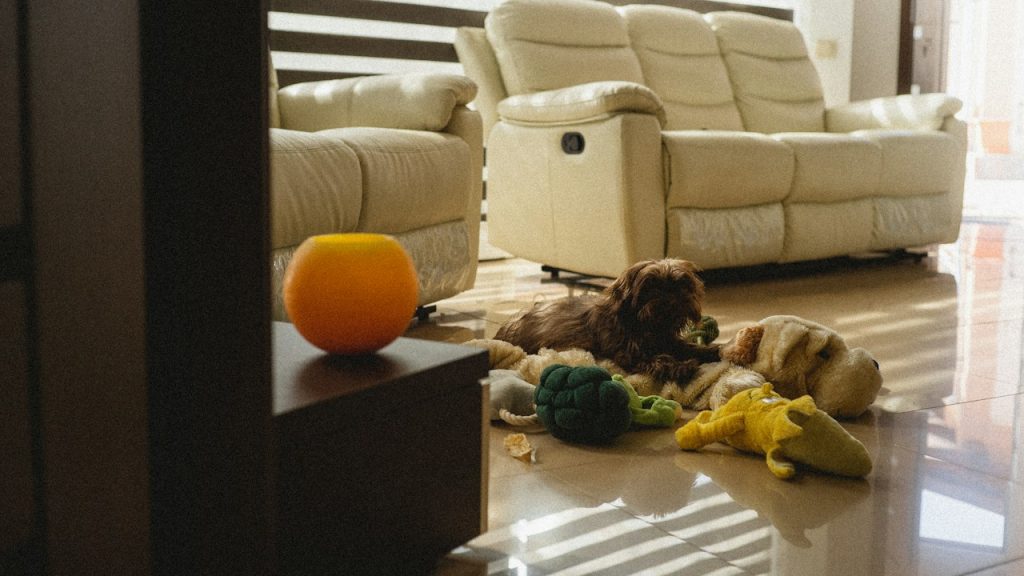
Toys are not only for burning energy. They can also give your dog a job to do. Rotate a few favorite toys instead of leaving every toy out all the time. When an old toy reappears after several days, it can feel exciting again. Try different textures and styles, including soft toys, balls, tug toys, and interactive and treat-dispensing dog toys. Before introducing a new toy, review our dog toy safety guide. Always choose toys that are appropriate for your dog’s size and chewing style, and supervise play with anything that could be torn apart or swallowed.
You can also make play interactive. A short game of fetch, tug, or hide-and-seek gives your dog exercise while strengthening the bond between you. End the game while your dog is still having fun rather than waiting until everyone is exhausted. Several short play sessions throughout the day can be more engaging than one marathon session.
Let your dog sniff
Walks are often treated as exercise, but for a dog, the neighborhood is also a giant information board. Sniffing lets dogs investigate who has been nearby and what has changed. On some walks, slow down and allow your dog extra time to explore safe smells instead of focusing only on distance. A relaxed sniff walk can provide valuable mental stimulation.
At home, hide a few treats or pieces of your dog’s regular food in safe, easy-to-find places and encourage a search. Start simple so your dog understands the game. As confidence grows, make the hiding places slightly more challenging. Keep portions in mind so enrichment treats remain part of the dog’s normal daily intake.
Teach something new
Training is another form of enrichment. Practice useful cues such as sit, stay, come, leave it, or place, but keep sessions upbeat and short. You can also teach playful skills such as touching your hand with the nose, spinning, finding a named toy, or putting toys into a basket. Reward-based training gives your dog a chance to think and succeed while improving communication between you.
Build calm time into the routine
Mental stimulation does not mean keeping a dog busy every minute. Dogs need quality rest, too. Create a comfortable area where your dog can settle without constant activity. A cozy bed, predictable routine, and periods of quiet can help balance active play. Puppies and senior dogs may need especially generous rest.
Pay attention to your individual dog
There is no perfect enrichment schedule for every dog. Age, breed tendencies, health, personality, and confidence all matter. One dog may adore puzzle games while another would rather sniff the yard. Some dogs thrive on social adventures, while others prefer calm activities at home. Watch your dog’s body language and adjust the difficulty and intensity accordingly.
The best routine is one you can maintain. A ten-minute sniff session, a quick training game, a toy rotation, and a little one-on-one attention can transform a quiet day. Enrichment is really about giving your dog safe opportunities to be a dog. Keep it varied, positive, and suited to the pup in front of you, and those everyday moments can add up to a life with more wagging, curiosity, and connection.